
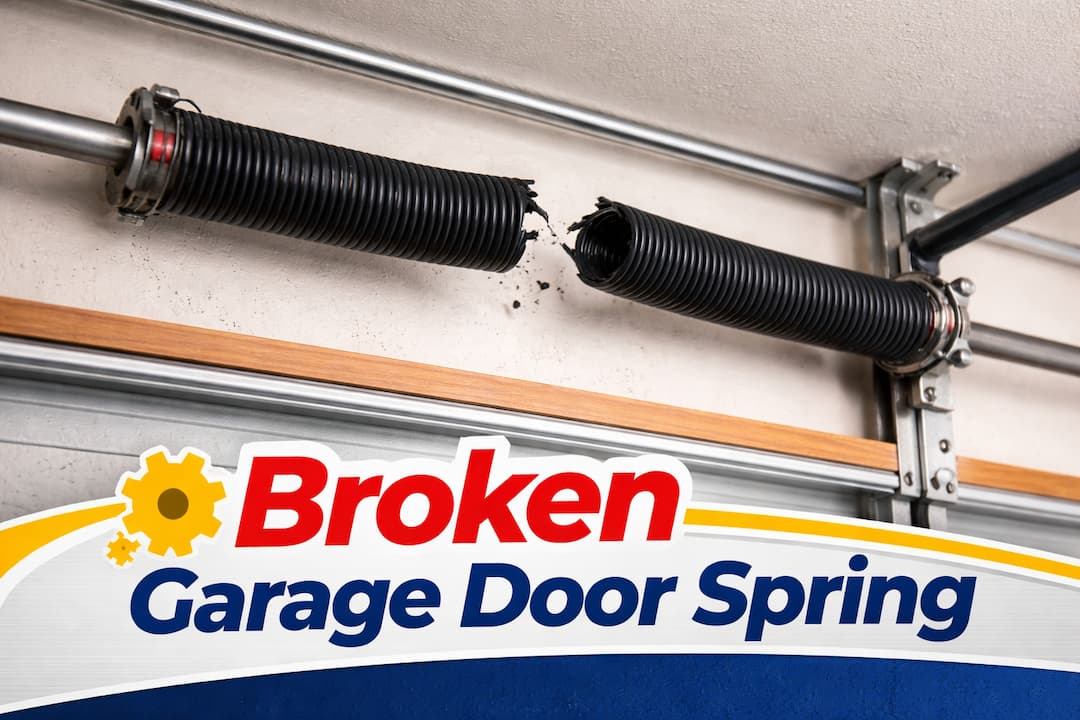
If you’re searching for how to replace broken garage door spring, chances are your garage door isn’t opening or you heard a loud snapping sound. A broken spring is one of the most common reasons a garage door stops working. However, this repair isn’t as simple as it looks. Garage door springs are under high tension, which makes them dangerous to handle without proper care. In this guide, you’ll learn how to replace a broken garage door spring safely, along with key signs, risks, and when it’s better to call a professional.
Is It Safe to Replace a Garage Door Spring Yourself?
Before you begin learning how to replace broken garage door spring, it’s important to understand the safety concerns. Garage doors use two main types of springs: torsion springs and extension springs. Torsion springs are mounted above the door and use torque to lift it, while extension springs are located on the sides and stretch during operation.
Both types are tightly wound and store a significant amount of energy. This makes the replacement process risky if done incorrectly. Injuries, improper installation, or further damage to the door system are common risks.
DIY replacement can be a good option if you have the right tools, technical knowledge, and follow proper safety steps. However, if you are unsure or dealing with a complex setup, it is safer to hire a professional.
Signs Your Garage Door Spring Is Broken
Knowing the signs will help you confirm whether you actually need to learn how to replace broken garage door spring. Here are the most common indicators:
- The garage door won’t open or feels very heavy when lifted manually
- You hear a loud “bang” sound from the garage
- There is a visible gap in the spring
- The door moves unevenly, shakes, or looks crooked
If you notice any of these issues, your garage door spring likely needs replacement.
Tools and Materials You’ll Need
To properly follow the process of how to replace broken garage door spring, you’ll need the right tools and materials:
- Winding bars to safely manage spring tension
- A wrench set for loosening and tightening hardware
- Safety gloves and protective goggles to prevent injury
- A replacement spring that matches the exact size and type of your existing spring
Using the correct tools and the right spring size is critical for both safety and proper door operation.
How to Choose the Right Replacement Spring
When learning how to replace broken garage door spring, choosing the correct replacement is one of the most important steps. Garage door springs are not universal. They vary based on size, weight capacity, and type, and using the wrong one can affect the door’s performance and safety.
The spring must match the weight of your garage door and the system it uses, whether it’s a torsion or extension setup. Installing the wrong size can put extra strain on the opener, cause uneven movement, or even lead to another breakdown.
Avoid guessing the spring size. A mismatched spring can damage the door system and increase the risk of injury. The best approach is to check the specifications on the old spring or refer to the manufacturer’s label. If the details are unclear, it’s safer to consult a professional before making a purchase.
Step-by-Step Guide to Replace Garage Door Spring
Below is a clear and structured process for how to replace broken garage door spring. Follow each step carefully and do not skip safety precautions.
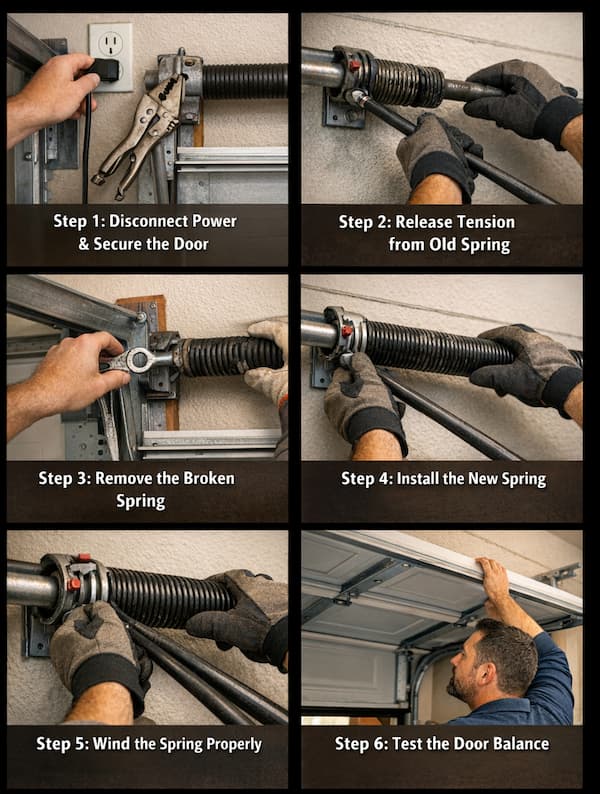
Step 1 – Disconnect Power and Secure the Door
Start by unplugging the garage door opener to prevent accidental movement. Secure the door in a fully closed position using clamps or locking pliers to keep it stable during the repair.
Step 2 – Release Tension from the Old Spring
Using proper winding bars, carefully release the tension from the broken spring. This step requires full attention, as the stored energy in the spring can be dangerous if released suddenly.
Step 3 – Remove the Broken Spring
Once the tension is fully released, loosen the bolts and remove the damaged spring from its mounting bracket. Keep all hardware organized for reuse if needed.
Step 4 – Install the New Spring
Position the new spring correctly on the shaft or side, depending on the type of system. Make sure it aligns properly with the brackets and cables before securing it in place.
Step 5 – Wind the Spring Properly
Using winding bars, apply the correct number of turns to the spring based on the manufacturer’s guidelines. Proper tension is critical for smooth and balanced operation.
Step 6 – Test the Door Balance
After installation, carefully remove the clamps and test the door manually. It should open and close smoothly without resistance. Reconnect the opener and check for proper function.
Common Mistakes to Avoid
While learning how to replace broken garage door spring, avoiding common mistakes is just as important as following the right steps. Even small errors can lead to serious issues.
- Using the wrong tools can make the process unsafe and difficult
- Installing an incorrect spring size can damage the door system and opener
- Over-tightening or under-winding the spring can affect balance and performance
- Ignoring safety precautions increases the risk of injury due to high spring tension
Taking the time to do the job correctly helps ensure long-term performance and safety.
Cost to Replace Garage Door Spring
The cost to replace broken garage door spring depends on whether you choose a DIY approach or hire a professional.
DIY replacement is generally more affordable, with costs mainly covering the price of the spring and basic tools. However, professional services typically cost more due to labor, expertise, and proper installation.
Several factors can affect the total price, including the type of spring, garage door size, complexity of the system, and your location. While DIY may save money upfront, professional repair can prevent costly mistakes in the long run.
When to Call a Professional
While many homeowners search for how to replace broken garage door spring, it’s not always a safe DIY task. In some situations, hiring a trained expert is the better and safer decision.
- If your garage door has a dual spring system
- If you don’t have the proper tools or technical knowledge
- If you’re concerned about safety or handling high-tension components
- If this is your first time dealing with garage door repairs
In these cases, it’s best to rely on experienced professionals who can handle the job correctly and safely.
For trusted and efficient service, contact Garage Door Services Okc. Our team is equipped to handle all types of garage door spring repair in OKC with precision and care.
Phone: +1 405-696-0777
Location: Oklahoma City, OK, United States
Choosing professional help ensures your garage door operates smoothly while reducing the risk of injury or further damage.
Conclusion
Understanding to replace broken garage door spring can help you handle minor repairs and identify issues early. From choosing the correct spring to following proper installation steps, safety should always be your top priority.
If you have the right tools and experience, DIY replacement can be a cost-effective solution. However, for complex systems or if you’re unsure, it’s always better to hire a professional.
If you need expert help, reach out to Garage Door Services Okc for dependable and efficient service. Calling a professional ensures your garage door operates safely and smoothly without unnecessary risks.
FAQs
How long do garage door springs last?
Garage door springs typically last between 7 to 10 years or around 10,000 cycles, depending on usage and maintenance.
Can I open the door with a broken spring?
It is not recommended. The door will be very heavy and forcing it open can damage the opener or cause injury.
How long does replacement take?
For professionals, it usually takes 1 to 2 hours. DIY replacement may take longer depending on experience.
Are torsion springs better than extension springs?
Torsion springs are generally more durable, safer, and provide smoother operation compared to extension springs.