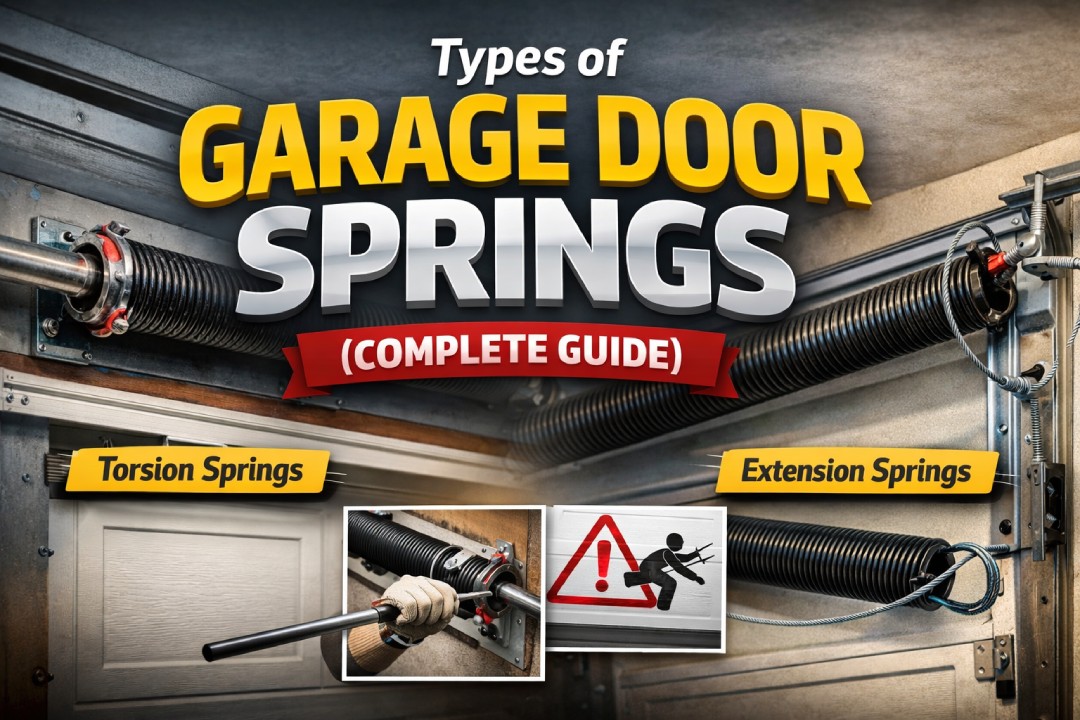
Understanding the types of garage door springs is essential for anyone who owns or maintains a garage door. These small but powerful components do most of the heavy lifting every time your door opens or closes. Choosing the right garage door spring system affects safety, performance, durability, and long-term repair costs. The two primary types of garage door springs are torsion springs and extension springs. While both serve the same purpose, they function differently and are designed for different door setups. Knowing the difference helps you make smarter decisions about maintenance, upgrades, and replacements.
What Are Garage Door Springs & How Do They Work?
Garage door springs are part of a counterbalance system that makes your heavy garage door feel light. Even though a typical residential garage door can weigh between 130 and 400 pounds, you can lift it with one hand because the springs offset most of that weight.
These springs store mechanical energy when the door closes and release it when the door opens. Torsion springs work by twisting and storing torque, while extension springs stretch and contract to create lifting force. In both systems, the springs carry nearly all the door’s weight, while the opener simply guides the movement.
Choosing the correct type of spring matters because it directly impacts smooth operation, noise level, lifespan, and overall safety. A properly selected and installed spring system ensures balanced performance and reduces strain on other garage door components.
Main Types of Garage Door Springs
1. Torsion Springs
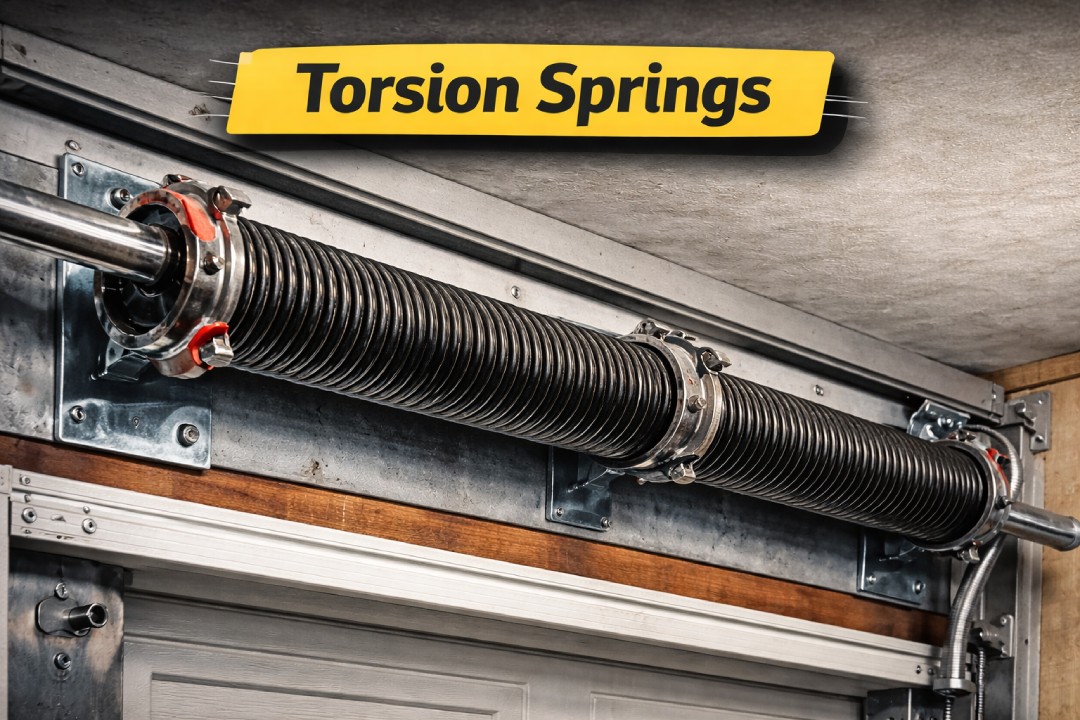
Torsion Springs for Garage Door are the most common and reliable option in modern garage door systems. They work by twisting around a metal shaft mounted above the garage door. When the door closes, the springs wind up and store energy. As the door opens, the springs unwind and release that stored torque, lifting the door smoothly and evenly.
Torsion springs are installed horizontally above the garage door opening. Depending on the door’s size and weight, a system may use a single torsion spring (common for lighter, single-car doors) or a double torsion spring setup (standard for heavier double-car doors). A two-spring system provides better balance and added safety if one spring fails.
Lifespan is measured in cycles — one cycle equals one full open and close. Standard torsion springs are typically rated for about 10,000 cycles, while high-cycle options can last 20,000 cycles or more.
Pros:
- Smoother and quieter operation
- Longer lifespan
- Safer when properly installed
- Better weight balance
Cons:
- Higher upfront cost
- Professional installation required
2. Extension Springs
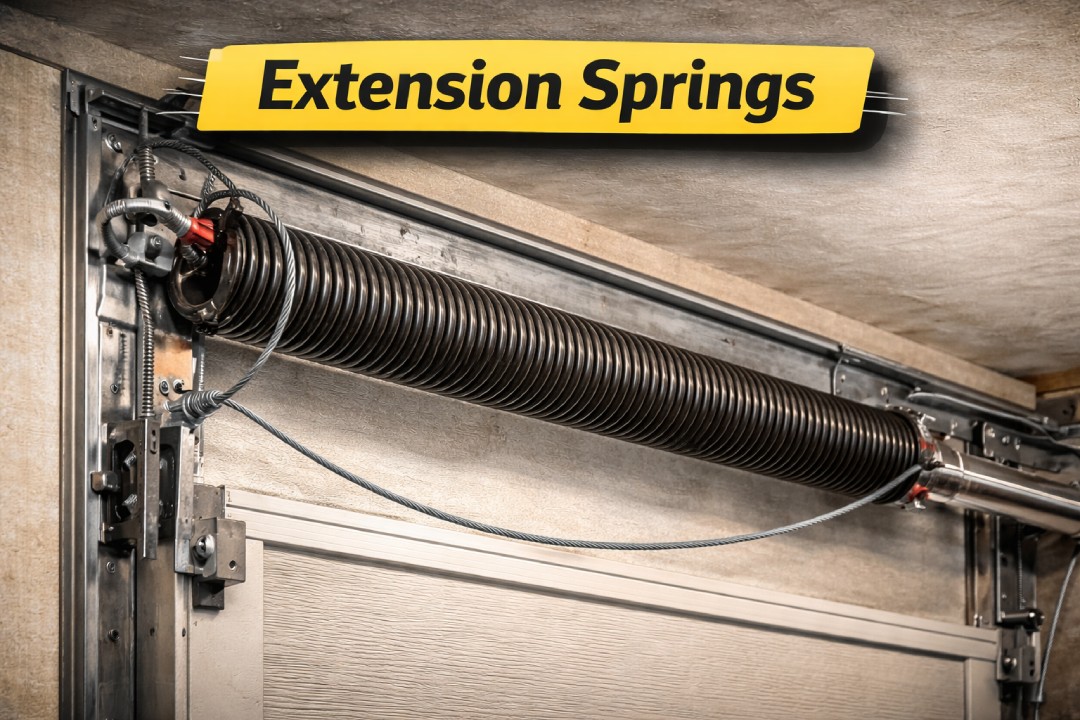
Extension springs operate differently. Instead of twisting, they stretch and contract along the horizontal tracks on both sides of the garage door. When the door closes, the springs extend and store energy. When the door opens, they contract to help lift it.
These springs are installed parallel to the upper tracks, making them easier to spot than torsion systems. Because they stretch under high tension, safety cables are critical. Safety cables run through the center of the spring and prevent it from flying loose if it breaks — which can otherwise cause serious damage or injury.
Extension springs are typically used on lighter or older garage door systems and are more budget-friendly.
Pros:
- Lower initial cost
- Simpler system design
- Suitable for lighter doors
Cons:
- Shorter lifespan
- Noisier operation
- More exposed moving parts
- Greater safety risk without cables
Understanding these two main types of garage door springs helps you determine which system best fits your home, usage level, and long-term maintenance goals.
Different Subtypes of Garage Door Springs
Torsion Spring Types for Garage Doors
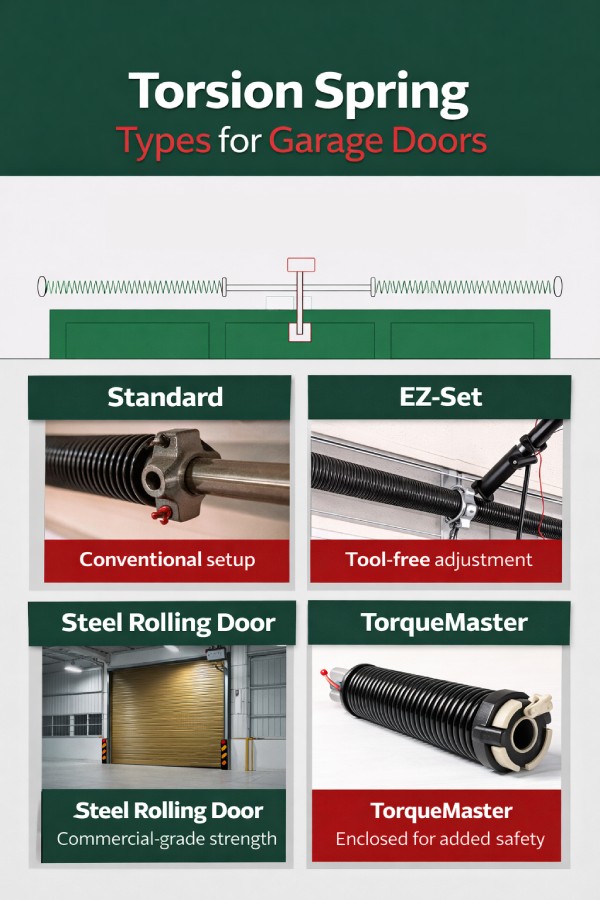
Not all torsion springs are the same. Different applications require different designs and cycle ratings.
1. Standard Torsion Springs
These are the most common springs found in residential garage doors. They are typically rated for around 10,000 cycles and work well for average daily use.
2. High-Cycle Torsion Springs
Designed for durability, high-cycle torsion springs can last 20,000 to 50,000 cycles depending on the setup. They are ideal for households that use their garage door multiple times a day or for long-term reliability.
3. Steel Rolling Door Springs
These heavy-duty torsion springs are used in commercial rolling steel doors. They are built to handle higher weight loads and frequent operation in warehouses, storage facilities, and industrial settings.
4. TorqueMaster System
This is an enclosed torsion spring system where the spring sits inside a metal tube for added safety and a cleaner appearance. It’s commonly used in specific branded garage door systems and offers contained protection if a spring breaks.
Extension Spring Types for Garage Doors
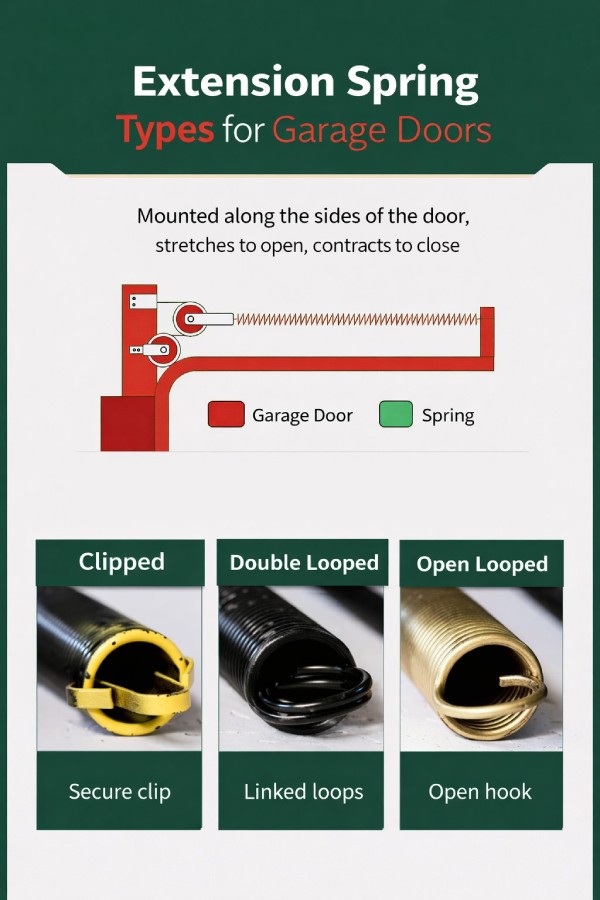
Extension springs also come in several end designs that affect strength and durability.
1. Open-Looped Extension Springs
These have open ends and are easier to replace. However, they are the weakest option and more prone to failure at the connection point.
2. Double-Looped Extension Springs
These feature two loops at the end for added strength and durability. They are more secure than open-looped designs but slightly harder to install.
3. Clipped-End Extension Springs
These are the strongest type of extension springs. The clipped ends reduce stress at connection points, making them more durable and suitable for heavier garage doors.
Torsion vs Extension Springs (Side-by-Side Comparison)
Below is a clear comparison to help determine which type fits your needs:
| Feature | Torsion Springs | Extension Springs |
| Cost | Higher upfront cost | Lower initial cost |
| Lifespan | 10,000–50,000 cycles | 5,000–10,000 cycles |
| Safety | Safer when properly installed | Requires safety cables to reduce risk |
| Noise Level | Quieter operation | Typically noisier |
| Maintenance Needs | Less frequent adjustments | More frequent wear and adjustments |
| Best Use Case | Modern homes, heavy doors, long-term durability | Lighter or older garage door systems |
In most residential situations, torsion springs are considered the more reliable and longer-lasting solution. However, extension springs can still be a practical option for lighter doors or budget-focused installations.
How to Identify Which Type Your Garage Door Springs Have
Identifying your garage door spring type is usually simple if you know where to look.
Visual Cues
If you see a large, tightly wound spring mounted on a metal shaft directly above the garage door opening, you have a torsion spring system. If you see long, thinner springs running parallel to the horizontal tracks on both sides of the door, you have extension springs.
Where to Look
Stand inside your garage with the door closed. Look above the door header first — torsion springs are installed there. If nothing is mounted above the door, check along the upper tracks on both sides for stretched springs.
When to Call a Professional
If you’re unsure, notice rust or wear, or suspect a broken spring, avoid touching anything. Garage door springs are under high tension and can cause serious injury. A trained technician can quickly confirm the type and condition safely.
Get the Service of Garage Door Spring Repair in OKC
Signs Your Garage Door Spring Needs Replacement
Garage door springs rarely fail without warning. Knowing the signs can prevent further damage.
Loud Bang
A sudden, loud snapping sound from the garage often indicates a broken spring. Many homeowners describe it as sounding like something exploded.
Door Feels Heavy
If the door suddenly becomes difficult to lift manually, the spring may no longer be counterbalancing the weight.
Crooked Movement
When one spring breaks in a two-spring system, the door may lift unevenly or appear tilted.
Gaps in the Coil
With torsion springs, a visible gap in the coil usually means the spring has snapped. This is a clear sign replacement is required.
Also Read: What Is the Average Cost of Garage Door Spring Replacement?
Which Type of Garage Door Spring Is Best?
Choosing the best option depends on usage, door weight, and long-term goals.
Residential Recommendation
For most modern homes, torsion springs are the better choice. They last longer, operate more smoothly, and provide better overall balance. High-cycle torsion springs are ideal for households that use the garage frequently.
Commercial Recommendation
Commercial properties typically require heavy-duty torsion or steel rolling door springs designed for high-cycle performance and heavier loads.
Budget vs Long-Term Value
Extension springs cost less upfront, making them appealing for tight budgets. However, torsion springs generally provide better long-term value due to longer lifespan, improved safety, and reduced maintenance needs.
In most cases, investing in a torsion spring system pays off through durability, smoother operation, and fewer service calls over time.
Frequently Asked Questions (FAQs)
What are the different types of garage door springs?
The two main types of garage door springs are torsion springs and extension springs. Torsion springs are mounted above the garage door and use twisting force to lift it. Extension springs run along the sides of the door tracks and stretch to create lifting force. Both systems serve the same purpose but operate differently.
Are torsion springs better than extension springs?
In most residential applications, torsion springs are considered better because they last longer, operate more smoothly, and provide improved safety and balance. Extension springs are more affordable upfront but typically require more maintenance and have a shorter lifespan.
Can I replace a garage door spring myself?
Garage door spring replacement is not recommended as a DIY project. Springs are tightly wound and under extreme tension, which can cause serious injury if handled incorrectly. It’s always safer to hire a trained technician who has the proper tools and experience to complete the job safely and correctly.