
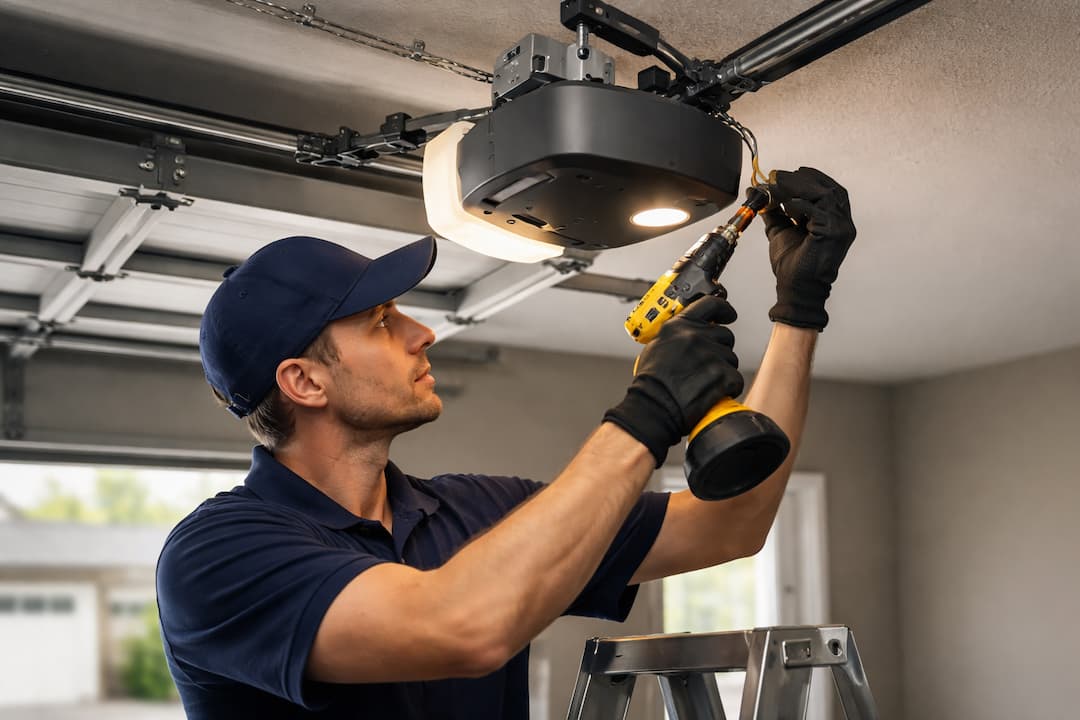
Is your garage door opener not working when you need it most? Few things are more frustrating than being stuck in your driveway or unable to leave for work because your garage door won’t respond. The good news is that many opener problems are caused by simple issues like dead batteries, power interruptions, or blocked safety sensors.
Before you panic or assume the motor has failed, there are several quick checks you can perform at home. This step-by-step troubleshooting guide will help you identify common causes and determine whether it’s a minor fix or time to call a professional. In many cases, the solution is easier — and less expensive — than you might think.
Quick Checklist: What to Check First
If your garage opener is not responding or your garage door opener won’t open, start with this quick troubleshooting checklist:
- Check the power supply – Make sure the opener is plugged in and the circuit breaker hasn’t tripped.
- Replace remote batteries – Weak or dead batteries are one of the most common causes of opener failure.
- Inspect the wall switch – Test the wall-mounted control panel to see if the issue is with the remote only.
- Look for sensor blockage – Remove dirt, debris, or objects blocking the safety sensors near the floor.
- Make sure the door isn’t manually locked – Check that the manual lock or emergency release hasn’t been engaged.
These simple steps solve a large percentage of garage door opener problems and can save you time before moving on to deeper troubleshooting.
7 Common Reasons Your Garage Door Opener Not Working
1. Dead Remote Batteries
This is the most common and easiest fix. If your remote suddenly stops working but the wall switch still operates the door, weak batteries are likely the issue.
Quick Fix:
You need to replace the batteries with new and test again. Make sure they are inserted correctly and check for corrosion inside the battery compartment.
2. Power Source Disconnected
If your opener isn’t responding at all, it may not be receiving power.
What to Check:
- Ensure the opener is plugged into the outlet.
- Check your home’s breaker panel for a tripped circuit.
- Reset any nearby GFCI outlet (especially if your garage shares one with another appliance).
Restoring power often resolves the issue immediately.
3. Misaligned Safety Sensors
Garage doors have safety sensors near the bottom of the tracks. If they are misaligned or blocked, the door may refuse to close.
Signs of Sensor Issues:
- Blinking lights on one or both sensors
- Door starts to close, then reverses
Quick Fix:
Clean the sensor lenses and ensure both sensors are facing each other directly. Adjust them until the indicator lights remain solid.
4. Broken Torsion Spring
If you hear the motor running but the door barely moves or feels extremely heavy when lifted manually, a broken torsion spring may be the cause.
Springs carry most of the door’s weight. When one breaks, the opener cannot lift the door properly.
Important:
Do not attempt to replace springs yourself. They are under high tension and can cause serious injury.
5. Stripped Gears in the Motor
If the motor runs but the door doesn’t move at all, the internal drive gears may be worn or stripped.
Signs:
- Humming or grinding noise
- Motor sounds active, but door stays in place
This issue usually requires professional repair or gear replacement.
6. Logic Board Failure
The logic board acts as the brain of your garage door opener. If it fails, the system may work intermittently or stop responding entirely.
Common Symptoms:
- Door works randomly
- Remote works sometimes but not always
- Lights flash unexpectedly
Electrical surges or aging components can cause logic board problems, and replacement is typically needed.
7. Travel Limit Settings Incorrect
Travel limit settings control how far the door opens and closes. If they are set incorrectly, the door may not fully close or may reverse before touching the ground.
Quick Fix:
Adjust the travel limit screws on the opener unit according to the manufacturer’s instructions. After these adjustments check and test.
When It’s Safe to DIY
Some garage door opener issues are simple and safe to handle on your own. These include:
- Replacing remote batteries
- Cleaning and realigning safety sensors
- Tightening visible bolts and brackets
- Lubricating rollers, hinges, and tracks
Regular maintenance can prevent many common problems and extend the life of your opener.
⚠️ Safety Warning: Never attempt DIY repairs involving springs, cables, or major motor components. These parts operate under extreme tension and can cause serious injury if handled improperly. When in doubt, contact a trained professional for Garage Door Services to ensure safe and reliable repairs. If you are from OKC you can contact us. We are one of the best Oklahoma City Garage Door Repair Companies.
When to Call a Professional
While some minor issues can be fixed at home, certain warning signs should never be ignored. These red flags indicate a more serious problem that requires professional attention:
- Loud snapping sound – Often signals a broken spring.
- Door appears uneven or crooked – May indicate cable or track damage.
- Motor overheating – If the opener feels hot or shuts off unexpectedly, internal components may be failing.
- Burning smell – Could point to electrical issues or motor burnout.
- Door slams shut – A major safety hazard, usually caused by spring failure.
If you notice any of these issues, stop using the garage door immediately. Continuing to operate a damaged system can worsen the problem and increase repair costs. A trusted local company like Affordable Garage Door Okc can diagnose the issue safely and restore proper function before it turns into a more expensive repair.
How to Prevent Garage Door Opener Problems
Preventative care is the best way to avoid sudden breakdowns and costly repairs. Regular garage door opener maintenance keeps your system running efficiently and safely.
Annual Maintenance
Schedule a professional inspection at least once a year. Technicians can check spring tension, motor performance, and overall system balance.
Lubrication Schedule
Lubricate rollers, hinges, and moving metal parts every 6 months. By following proper lubrication it reduces the friction and extends component lifespan.
Sensor Alignment Checks
Periodically check that safety sensors are clean, aligned, and securely mounted. Misaligned sensors are a common cause of closing issues.
Weather Protection
Extreme temperatures can affect metal components and electronics. Keep your garage properly insulated and replace worn weather seals to protect the opener system.
Surge Protection
Electrical surges can damage the opener’s logic board. Installing a surge protector helps safeguard your investment.
Learning how to maintain a garage opener doesn’t require advanced skills—just consistency. With routine maintenance and timely inspections, you can prevent most major problems and keep your garage door operating smoothly year-round.
Conclusion
If your garage door opener stops working, start with the basics: check the power supply, replace remote batteries, inspect safety sensors, and ensure the door isn’t manually locked. Many common problems have simple solutions that you can safely handle yourself.
However, issues involving springs, cables, overheating motors, or electrical components should always be addressed by trained professionals. Handling high-tension parts without proper tools can be dangerous.
When troubleshooting doesn’t resolve the issue, scheduling a professional inspection is the safest way to restore reliable operation. Acting quickly not only protects your garage door system but also prevents small problems from turning into costly repairs.
Frequently Asked Questions
Why is my garage door opener running but not lifting the door?
If your opener motor is running but the door isn’t moving, the issue is often a broken torsion spring or stripped internal gears. Springs carry the weight of the door, so when one breaks, the opener cannot lift it. In some cases, the emergency release may have been disengaged.
Why does my garage door opener work sometimes?
Intermittent operation is usually caused by signal interference, weak remote batteries, overheating motor components, or a failing logic board. Sensor misalignment can also cause the door to work inconsistently. If the problem continues after basic troubleshooting, a professional inspection is recommended.
Can I reset my garage door opener?
Yes, most openers have a reset or “learn” button located on the motor unit. You can reset the system by unplugging it for 30–60 seconds or following the manufacturer’s instructions. Keep in mind that resetting may erase remote programming, requiring you to reconnect your devices.
How long do garage door openers last?
On average, garage door openers last 10–15 years, depending on usage, maintenance, and build quality. Regular servicing and lubrication can extend the lifespan and improve overall performance.
How much does it cost to fix a garage door opener?
Repair costs vary depending on the issue. Minor fixes like sensor alignment or remote replacement are typically inexpensive. However, motor repairs, gear replacement, or logic board failure can cost more. A professional diagnosis ensures accurate pricing and prevents unnecessary expenses.