Garage door springs carry most of the door’s weight and help it open and close smoothly. Without the correct spring system, the door may feel extremely heavy, move unevenly or place too much strain on the opener.
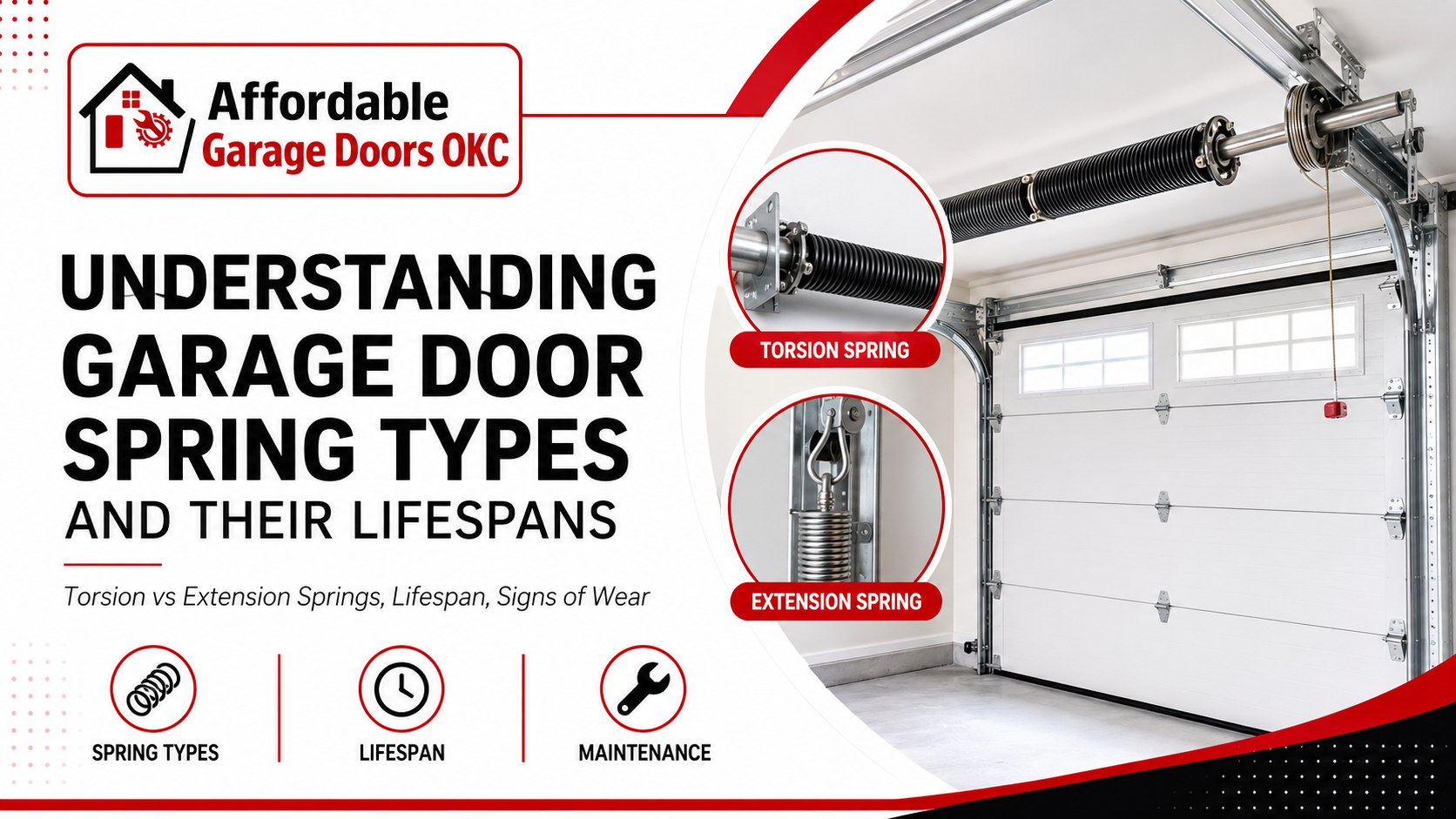
Most residential systems use torsion springs or extension springs. Each type works differently and has a different expected lifespan. Standard garage door springs are often rated for about 10,000 operating cycles. One cycle means opening and closing the door once. Higher-cycle spring options are also available for homes and businesses with frequent garage use.
Understanding your spring system helps you plan maintenance, identify warning signs and avoid an unexpected garage door failure.
Why Are Garage Door Springs Important?
A garage door may weigh hundreds of pounds. The spring system counterbalances this weight so the door can move with less effort.
The springs work with cables, drums, tracks, rollers and the garage door opener. When the springs are correctly sized and balanced, the door should move smoothly and remain stable when opened partway.
Worn or incorrectly sized springs may cause:
- Slow or uneven movement
- Excessive opener strain
- Loud popping or grinding sounds
- Loose or damaged cables
- A door that falls quickly
- Failure to open completely
- Sudden spring breakage
If your door has stopped moving, the spring may not be the only possible cause. Read Why Is My Garage Door Not Opening in Oklahoma City? Common Causes, Repair Costs, and Safety Steps to learn about opener, sensor, track and power-related issues.
What Is a Garage Door Spring Cycle?
Manufacturers usually measure spring life in cycles instead of years.
One complete cycle includes:
- Opening the garage door
- Closing the garage door
A spring rated for 10,000 cycles does not automatically last the same number of years in every property. Its lifespan depends on how often you operate the door.
For example:
- Two cycles each day may provide about 13 years of use.
- Four cycles each day may provide about seven years.
- Eight cycles each day may reduce the lifespan to about three or four years.
Clopay notes that many standard garage door springs last about 7 to 10 years under normal use, or roughly 10,000 opening and closing cycles.
A household with several drivers may use its garage door more often than expected. Commercial doors at warehouses, workshops and service centres may complete hundreds of cycles each week.
What Are Torsion Springs?
Torsion springs are mounted horizontally above the garage door opening. They sit around a metal shaft and work by twisting as the door moves.
When the door closes, the springs wind and store energy. When the door opens, they unwind and help lift the door.
Torsion springs are common because they provide controlled movement and distribute lifting force across the door. They usually offer smoother operation and a longer service life than extension springs.
What Are the Benefits of Torsion Springs?
Torsion systems offer several advantages:
- Smoother opening and closing
- Better door balance
- Controlled movement
- Less bouncing
- Fewer exposed moving parts
- Support for larger or heavier doors
- High-cycle upgrade options
They can also reduce strain on a properly matched opener because the door remains better balanced throughout its travel.
How Long Do Torsion Springs Last?
Standard torsion springs often last between 10,000 and 20,000 cycles. Some manufacturers provide higher-cycle springs rated for 25,000, 50,000 or even 100,000 cycles for demanding residential and commercial applications.
The actual lifespan depends on:
- Daily door use
- Spring size
- Door weight
- Installation quality
- Rust and moisture
- Temperature changes
- Maintenance
- Changes made to the door
Adding insulation, decorative hardware, windows or other weight after installation can disturb the door’s balance unless the springs are recalculated. DASMA warns that extra door weight can cause unbalanced and irregular operation.
What Are Extension Springs?
Extension springs usually run alongside the horizontal tracks on both sides of the garage door. They stretch when the door closes and contract as the door opens.
These springs are often found on older or lighter residential garage doors. They are usually less expensive than torsion springs but may provide less controlled movement and a shorter lifespan.
What Are the Benefits of Extension Springs?
Extension springs may suit certain garages because they:
- Have a lower initial cost
- Work in some low-headroom spaces
- Fit many lightweight doors
- Use a straightforward lifting design
However, both springs must provide equal tension. When one side becomes weaker, the door may rise unevenly or place extra force on the tracks.
How Long Do Extension Springs Last?
Many standard extension springs are rated for about 10,000 cycles. Actual service life varies according to the spring design, door weight and daily use.
Extension springs should have safety containment cables running through them. These cables help control the spring if it breaks and prevent it from flying across the garage. Clopay includes safety containment cables with its extension spring systems.
A missing or damaged safety cable requires professional attention.
Which Spring Type Is Better for Your Garage?
Torsion springs are often the preferred option for modern residential garage doors because they offer smoother movement and more controlled lifting.
Extension springs may still be suitable when:
- The door is lightweight
- Headroom is limited
- The existing system is designed for them
- The garage layout does not support a standard torsion setup
Available headroom and side room may affect which spring and track system can be installed. A professional technician must inspect the opening before recommending a conversion.
The right choice also depends on the door’s size, material, insulation and expected daily use.
What Factors Reduce a Garage Door Spring’s Lifespan?
A spring’s cycle rating is an estimate under expected operating conditions. Several factors can shorten its life.
Frequent Garage Door Use
A busy household can use a garage door six or more times a day. This adds cycles quickly.
Commercial doors operate even more often. Businesses should consider higher-cycle spring systems designed around actual daily traffic.
For doors that receive frequent use, review suitable opener options through Commercial Garage Door Openers in Oklahoma City.
Poor Spring Selection
A spring must match the door’s exact weight and design. A spring that is too weak or too strong can create poor balance and irregular operation.
DASMA explains that spring dimensions, installation, handling and door usage all affect expected cycle life.
Oklahoma Weather
Heat, cold, humidity and storms can affect metal parts. Temperature changes may cause expansion and contraction, while moisture can support corrosion.
Storm winds can also place pressure on doors, tracks and spring systems. Learn more in How OKC Storms Affect Garage Door Springs?.
Rust and Corrosion
Rust weakens the spring surface and may increase friction between the coils. This can lead to noise and early failure.
Garage humidity, water leaks and road salt carried in by vehicles may increase corrosion risk.
Poor Door Balance
When a garage door is unbalanced, the springs, cables and opener work under uneven force.
The opener may appear to be the problem when the real issue is a weak or incorrect spring. A professional Garage Door Opener OKC inspection should include a door balance check.
What Are the Signs of a Worn or Broken Spring?
A broken spring may be easy to identify, but gradual wear can be harder to notice.
Look for these warning signs:
- A visible gap in a torsion spring
- A stretched or hanging extension spring
- The door feels unusually heavy
- The opener cannot lift the door
- The door opens only a few inches
- The door moves unevenly
- Cables appear loose
- You hear a loud bang from the garage
- The door falls when lowered manually
- The top panel bends during opening
A visible separation in a torsion spring coil usually means the spring has broken and needs replacement.
Stop operating the door when you notice these signs. Continued use may damage the opener, cables, panels or tracks.
Should Both Springs Be Replaced at the Same Time?
Many double-door systems use two torsion springs.
When one spring breaks, the second spring has often completed a similar number of cycles. Replacing both springs at the same time can help restore even performance and reduce the chance of another service call soon after.
Clopay recommends replacing both springs together on two-spring systems because they experience similar wear.
The technician should still inspect the entire system and confirm the correct spring size before replacement.
Can You Replace a Garage Door Spring Yourself?
Garage door spring replacement is not a safe DIY task.
Springs store significant energy. Incorrect tools or procedures can cause the spring, winding bar, cable or door to move suddenly.
Professional service is recommended because technicians must:
- Secure the garage door
- Release or apply spring tension
- Measure the existing spring
- Weigh or calculate the door
- Select the correct replacement
- Inspect cables and drums
- Balance the door
- Test manual and automatic operation
Manufacturers warn that spring adjustment and replacement should be handled by trained professionals due to the high tension involved.
Do not loosen brackets, winding cones, cables or spring hardware.
How Can You Help Garage Door Springs Last Longer?
You cannot prevent normal metal fatigue, but regular care may help the system operate with less strain.
Use these steps:
- Schedule professional inspections.
- Keep tracks and moving parts clean.
- Report rust, noise or uneven movement early.
- Avoid repeatedly opening and closing the door without need.
- Do not add weight to the door without checking spring balance.
- Replace damaged rollers, hinges and cables.
- Have the door balance tested.
- Use the correct lubricant recommended for the system.
Commercial door guidance also recommends professional spring lubrication or adjustment when required.
Frequently Asked Questions
Are torsion springs safer than extension springs?
Torsion springs usually offer more controlled movement because they remain mounted around a shaft. Extension springs require safety containment cables to reduce the danger caused by a broken spring.
Can a garage door opener lift a door with a broken spring?
The opener may move the door slightly, but it should not be used to lift a door with a broken spring. The extra weight can damage the opener or door panels.
How do I know my spring cycle rating?
Check your installation records or ask a garage door technician. The rating depends on the spring dimensions, wire size and door weight.
Is a high-cycle spring worth the cost?
It may provide better value for busy homes and commercial properties. The right choice depends on how often the door operates each day.
Can cold weather break a garage door spring?
Cold weather does not automatically break a healthy spring, but temperature changes, corrosion and existing metal fatigue may contribute to failure.
Schedule Garage Door Spring Service in Oklahoma City
Affordable Garage Doors OKC provides garage door spring inspections, repairs and replacement services throughout:
- Del City
- Edmond, OK
- Midwest City
- Moore, OK
- Mustang
- Norman, OK
- Oklahoma City
- Newcastle
- Yukon, OK
Business: Affordable Garage Doors OKC
Address: Oklahoma City, OK
Phone: +1 405-696-0777
Website: Affordable Garage Doors OKC
Call for professional help if your garage door feels heavy, moves unevenly or has a visible broken spring. A proper inspection helps protect your door, opener and property.