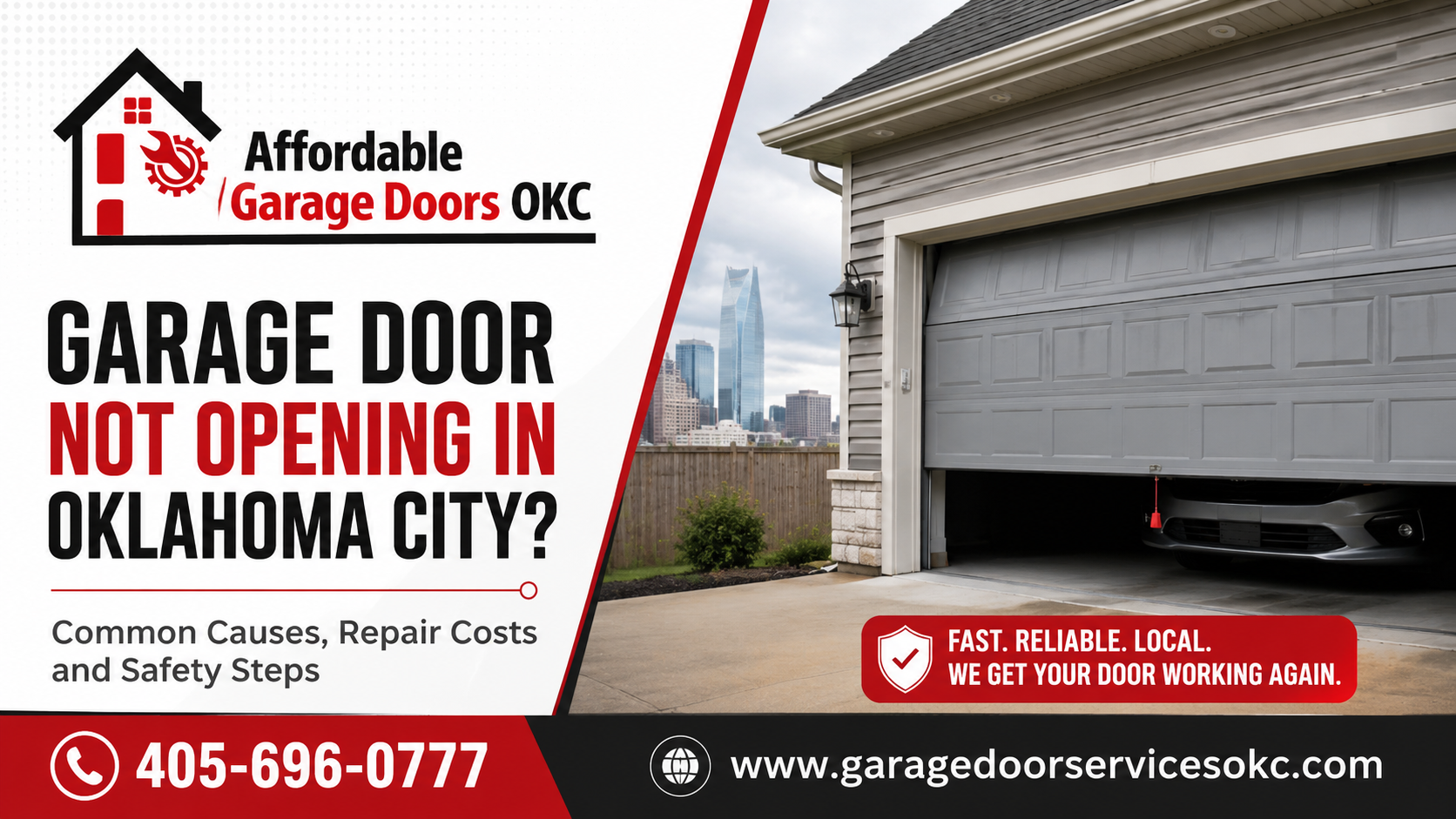
A garage door that refuses to open can disrupt your entire day. Your vehicle may be trapped inside, your property may feel less secure, or the door may stop halfway and create a serious safety risk.
Garage door problems often appear without warning. However, the cause may have been developing for weeks. Worn springs, damaged tracks, faulty sensors, electrical problems, and Oklahoma’s changing weather can all affect how the system works.
Understanding the warning signs helps you take the right action. It also protects you from unsafe repairs and unnecessary damage.
Table of Contents:
ToggleWhy Is Your Garage Door Not Opening?
A garage door relies on several connected parts. The opener starts the movement, but the springs carry most of the door’s weight. Cables, rollers, tracks, sensors, and hinges then guide the door safely.
A problem with one part can stop the entire system.
Common causes include:
- Broken or weak garage door springs
- Disconnected or damaged cables
- Blocked safety sensors
- Dead remote-control batteries
- Loss of electrical power
- Bent or obstructed tracks
- Worn garage door rollers
- A locked manual release system
- A faulty garage door opener
- Weather-related expansion or corrosion
Avoid forcing the door open. Doing so may damage the opener, bend the tracks, or cause the door to fall unexpectedly.
How Can You Tell If the Garage Door Spring Is Broken?
Garage door springs balance the weight of the door. Without working springs, a standard garage door becomes too heavy for the opener to lift safely.
A broken spring often creates a loud snapping or banging sound. The noise may sound like something hit the garage wall. You might also notice:
- A visible gap in the spring
- A door that lifts only a few inches
- An opener that runs without raising the door
- A door that feels unusually heavy
- Loose cables near the sides of the door
- A crooked or uneven door
- The top section bending when the opener runs
Do not attempt to replace a torsion spring yourself. Garage door springs operate under high tension. Improper handling can cause severe injuries and property damage.
Oklahoma weather can increase stress on metal components. Temperature changes, humidity, wind, and storms can shorten spring life. Read How OKC storms affect garage door springs to understand how local conditions affect your system.
Why Is the Garage Door Opener Running but the Door Is Not Moving?
When you hear the motor running but the door remains closed, the opener may no longer be connected to the door.
Check the emergency release cord. It usually hangs from the opener rail and allows manual operation during a power failure. If someone pulled it, the trolley may be disconnected.
Other possible causes include:
- A broken drive belt or chain
- Worn internal opener gears
- A broken spring
- Damaged lifting cables
- Incorrect travel-limit settings
- A stripped trolley connection
Do not continue pressing the remote repeatedly. The opener may overheat or suffer further damage.
A technician can inspect the opener and determine whether it needs adjustment, repair, or replacement.
Could the Safety Sensors Be Stopping the Door?
Garage door safety sensors sit near the floor on both sides of the opening. They create an invisible beam across the doorway. If an object interrupts the beam, the system prevents the door from closing.
Sensor problems commonly cause a door to reverse or remain open.
Check for:
- Boxes, tools, leaves, or other objects blocking the beam
- Dirt or moisture on the sensor lenses
- Loose wiring
- Misaligned sensors
- Flashing sensor lights
- Direct sunlight affecting the signal
Clean the lenses with a soft, dry cloth. Make sure both sensors face each other at the same height.
Never disable or bypass the safety sensors. They protect children, pets, vehicles, and anyone passing beneath the door.
Can Oklahoma Weather Stop a Garage Door From Working?
Oklahoma City experiences strong winds, storms, heat, cold, dust, and rapid temperature changes. These conditions can affect several garage door components.
Hot weather may cause metal tracks and door panels to expand. Cold temperatures can thicken lubricant and make moving parts less responsive. Moisture may cause rust on springs, hinges, rollers, and cables.
Strong winds can also push a door out of alignment or damage unsupported panels.
Weather-related warning signs include:
- Grinding or squeaking noises
- Slow door movement
- Rust around the springs or tracks
- Gaps around the weather seal
- Loose hardware
- Warped door panels
- Water entering beneath the door
Regular inspection and lubrication reduce the risk of sudden failure. These Best garage door repair tips for Oklahoma weather explain how to protect your system throughout the year.
Why Does the Garage Door Open Only Partway?
A garage door that stops halfway may have a balance, track, opener, or spring problem.
Possible causes include:
- A weak spring
- Excessive friction in the tracks
- Damaged rollers
- Incorrect opener limits
- An obstruction along the track
- A binding hinge
- A failing opener motor
Stop using the door if it shakes, tilts, or makes loud noises. Continued operation can pull the cables loose or cause the door to leave the tracks.
A professional balance test can identify whether the springs still support the door correctly.
Is It Safe to Open the Garage Door Manually?
Manual operation may be possible when the door is in good condition and the springs are working.
First, close the door fully. Pulling the emergency release while the door is open can cause it to fall if the springs or cables have failed.
Do not manually lift the door when:
- A spring is broken
- A cable is loose or damaged
- The door is crooked
- A roller has left the track
- The door feels extremely heavy
- The track is bent
- The door is hanging unevenly
When the system appears stable, disconnect the opener and lift the door using both hands. The door should move smoothly and remain open without assistance. A door that drops or feels heavy needs professional attention.
How Much Does Garage Door Repair Cost in Oklahoma City?
Garage door repair costs depend on the damaged part, the door’s size, the system’s age, and the work required.
Factors that influence the final price include:
- Spring type and size
- Number of springs
- Opener brand and model
- Extent of track damage
- Cable or roller condition
- Door material
- Replacement-part availability
- Emergency or after-hours service
- Labour and safety requirements
A minor sensor adjustment will usually cost less than spring, cable, panel, or opener replacement.
Ask for a clear inspection and estimate before approving the work. A trustworthy company should explain the problem, recommended solution, parts required, and expected cost.
Should You Repair or Replace the Garage Door?
Repair is often the right choice when the door remains structurally sound and the issue affects one replaceable component.
Repair may make sense when:
- The door is less than 10 to 15 years old
- Only one spring, cable, roller, or sensor has failed
- The panels remain straight and secure
- The opener needs a standard repair
- The problem has not caused structural damage
Replacement may offer better value when:
- The door has major panel damage
- Repairs occur frequently
- Replacement parts are difficult to find
- The door lacks modern safety features
- The system has poor insulation
- The door no longer supports the home’s security needs
- The repair cost approaches the price of a new system
A new insulated garage door may also improve comfort, reduce outside noise, and update your property’s appearance.
How Can You Prevent Garage Door Problems?
Preventive maintenance helps find worn parts before they fail.
Homeowners should:
- Watch and listen during operation
- Keep the tracks free from objects
- Clean the safety sensors
- Test the auto-reverse feature
- Inspect weather seals
- Tighten loose visible hardware carefully
- Apply approved garage door lubricant
- Replace remote batteries
- Schedule professional inspections
- Stop using the door when movement becomes uneven
Never apply lubricant to the tracks. Tracks should stay clean and dry. Lubricate the rollers, hinges, springs, and other approved moving points instead.
For professional inspections, repairs, opener work, spring service, and new installations, review the available garage door services.
When Should You Call a Garage Door Technician?
Contact a qualified technician when the door presents a safety risk or the problem involves high-tension components.
Professional help is important when:
- A spring breaks
- A cable comes loose
- The door leaves its tracks
- The door hangs unevenly
- The opener produces smoke or a burning smell
- The door falls suddenly
- Panels bend during operation
- The system repeatedly reverses
- The door cannot be secured
- The problem returns after basic troubleshooting
Fast action can prevent further damage and restore safe access to your property.
Get Reliable Garage Door Help in Oklahoma City
A garage door that will not open is more than an inconvenience. It may indicate a broken spring, failing opener, damaged cable, blocked sensor, or weather-related problem.
Garage Door Services OKC provides repair, maintenance, opener, spring, and installation support for residential and commercial properties. With more than 10 years of local experience, the team focuses on safe work, clear communication, and long-term results.
For trusted support with garage doors OKC, call 405-696-0777 to arrange an inspection.
Frequently Asked Questions
Why is my garage door making noise but not opening?
The system may have a broken spring, damaged opener gear, disconnected trolley, or blocked track. Stop running the opener until the door has been inspected.
Can a garage door open with a broken spring?
The opener may lift the door a few inches, but continued use can damage the motor and cables. Do not attempt to lift a heavy door with a broken spring.
Why does my garage door close and then open again?
The safety sensors may be blocked or misaligned. Incorrect force settings, track resistance, or an object beneath the door can also cause reversal.
How often should a garage door receive maintenance?
A professional inspection once a year suits most residential systems. Doors used several times each day may need more frequent maintenance.
How long does a garage door repair take?
Many common repairs can be completed during one visit. Repair time depends on the fault, the door type, and whether suitable replacement parts are available.
Should I repair a garage door opener or replace it?
Repair may be suitable for a newer opener with a minor fault. Replacement is often better for an old, unreliable opener that lacks modern safety and security features.