
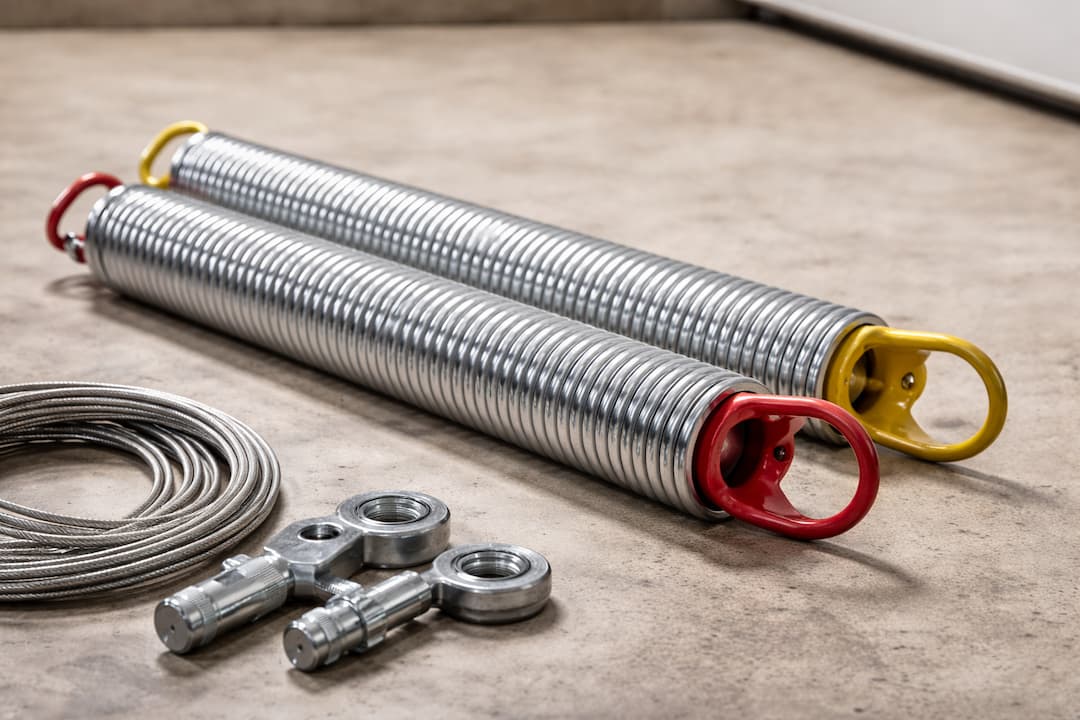
Garage doors are one of the largest moving components in any home, yet most homeowners rarely think about the mechanism that makes them easy to lift. Behind that smooth movement are Garage Door Extension Springs — powerful components designed to counterbalance hundreds of pounds of weight.
Understanding how these springs work, the types available, and how to maintain them can help you prevent sudden breakdowns, improve safety, and extend the life of your entire garage door system.
What Are Garage Door Extension Springs?
Garage door extension springs are heavy-duty, tightly wound coils mounted horizontally along the upper tracks on both sides of the door. Their primary purpose is to offset the weight of the door, making it easier to open manually or with an automatic opener.
Unlike torsion springs, which use rotational force from a central shaft, extension springs operate by stretching and contracting. When the door closes, the springs stretch and build tension. When the door opens, they contract and release stored energy to assist with lifting.
Because they operate under significant tension, these springs must be installed with safety cables running through them. These cables prevent dangerous recoil if a spring breaks.
How Garage Door Extension Springs Work (Step-by-Step)
Extension springs rely on the principle of stored mechanical energy.
1. Door in Closed Position
When the garage door is fully closed:
-
The springs are stretched to their maximum length.
-
Tension is at its highest point.
-
Energy is stored within the coils.
2. Door Begins to Open
As the door opens:
-
The springs begin to contract.
-
Stored energy is released.
-
The contraction assists in lifting the heavy door panels.
3. Door Fully Open
When the door reaches the open position:
-
The springs are at their shortest length.
-
Tension is reduced.
-
The door remains balanced with minimal strain on the opener.
This stretching and contracting process is known as a cycle. Each time the door opens and closes, one full cycle is completed. Over time, repeated cycles cause metal fatigue.
Types of Garage Door Extension Springs
Choosing the correct extension spring is essential for safe and efficient performance.
Standard Extension Springs
These are the most commonly used springs in residential garage systems. They are available in various lengths and strengths to match specific door weights.
High-Cycle Extension Springs
High-cycle springs are engineered for durability. If your garage door is used multiple times per day, these springs can significantly reduce replacement frequency. They are designed to withstand more cycles than standard options.
Color-Coded Extension Springs
Extension springs are often marked with color codes that indicate their lifting capacity. This coding system allows technicians to quickly identify the proper spring based on door weight. Using the wrong color rating can result in poor balance or system strain.
Open-End and Double-Loop Springs
-
Open-end springs are easier to replace but may be less durable.
-
Double-loop springs provide added strength and are commonly used for heavier doors.
Why Proper Balance Matters
When extension springs are properly sized and installed, the garage door should feel balanced. You should be able to lift it manually with moderate effort.
If the springs are too weak:
-
The door feels heavy.
-
The opener strains.
-
Components wear out faster.
If the springs are too strong:
-
The door may not close fully.
-
The system becomes unstable.
-
Rollers and tracks experience extra stress.
Proper balance protects the motor, cables, pulleys, and tracks from unnecessary wear.
Signs Your Extension Springs Are Failing
Extension springs rarely fail without warning. Look for these common indicators:
-
Gaps in the spring coils
-
Visible rust or corrosion
-
Jerky or uneven door movement
-
Loud snapping sound from the garage
-
Door slams shut quickly
-
Garage door feels unusually heavy
If one spring breaks, it’s often recommended to replace both. Springs wear at similar rates, and replacing only one can create imbalance.
How Long Do Extension Springs Last?
Most standard extension springs are rated for 10,000 to 15,000 cycles. For an average household that uses the garage door four times per day, this equals approximately 7–10 years.
High-cycle springs may last significantly longer, making them ideal for busy households.
Environmental factors such as humidity, temperature fluctuations, and lack of lubrication can reduce lifespan.
Maintenance Tips to Extend Spring Life
Routine maintenance can prevent unexpected failures:
-
Lubricate springs with garage door lubricant every few months
-
Inspect for rust or coil separation
-
Check safety cables for wear
-
Listen for unusual noises during operation
-
Schedule annual professional inspections
Never attempt to adjust or remove extension springs without proper tools and training. They are under high tension and can cause serious injury.
Final Thoughts
Garage door extension springs play a crucial role in daily convenience and home safety. By understanding how they function, recognizing warning signs, and investing in regular maintenance, you can extend the life of your garage door system and avoid sudden breakdowns.
If you suspect spring broken or damage and from Oklahoma City, you can consult us we provide Garage Door Spring Repair in OKC and ensure safe and accurate replacement.
Frequently Asked Questions (FAQ)
How do I know if my extension spring is broken?
If your garage door suddenly feels extremely heavy or opens unevenly, a spring may be broken. You might also hear a loud bang when the break occurs. Visual gaps in the coil are another strong indicator.
Can I replace extension springs myself?
Replacing extension springs can be dangerous due to the tension stored in the coils. Without proper tools and experience, there is a risk of serious injury. Professional replacement is strongly recommended.
What is the difference between torsion and extension springs?
Torsion springs operate using rotational force and are mounted above the garage door opening. Extension springs stretch along the sides of the door. Torsion systems are often considered smoother and more durable, while extension systems are typically more affordable.
Why are extension springs color-coded?
Color coding indicates the weight capacity of the spring. Each color represents a specific lifting strength. This ensures technicians install the correct spring for the door’s weight and size.
Should both extension springs be replaced at the same time?
Yes, it is generally recommended. When one spring breaks, the other has likely experienced similar wear and may fail soon after.
How often should extension springs be inspected?
A visual inspection every few months is helpful. However, a professional inspection once a year ensures the system remains safe and balanced.